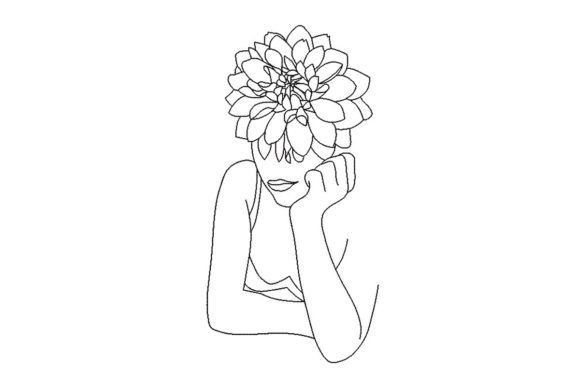
A Woman with a Flower on Her Head
As an experienced embroidery designer preparing for a busy weekend craft fair, I spend hours evaluating new digital assets before they ever touch a hoop. Today, I am reviewing A Woman with a Flower on Her Head, a design intended to elevate your handmade product line. The prompt suggests this is a "fancy" piece where you can choose the color scheme and materials. This flexibility is a double-edged sword; it offers creative freedom but demands careful execution to ensure the final result feels premium rather than generic.
First Impressions: Elegance Meets Market Appeal
The title A Woman with a Flower on Her Head immediately conjures images of soft, romantic aesthetics. It does not scream modern minimalism or rustic farmhouse chic; instead, it leans toward elegance and timeless beauty. For a booth display, this design has the potential to stand out as a focal point. Customers often gravitate toward imagery that feels personal and artistic. A floral motif on a human figure adds a narrative element that simple geometric patterns lack.
When I visualize this on a table full of goods, I see it performing best as a statement piece. It fits perfectly into the Beauty category if we consider how it adorns accessories, but its true power lies in its versatility as a decorative art form. The description mentions choosing the color scheme at your discretion. This means the design could be rendered in pastel threads for a spring market or deep jewel tones for a holiday bazaar. However, without specific guidance on stitch density or file format in the provided text, the first rule of production is to verify the technical details before committing to a large batch.
Strategic Product Placement for Craft Fairs
In the competitive environment of a handmade market, knowing where to place your design is half the battle. Let us evaluate how A Woman with a Flower on Her Head translates across various high-demand items.
- Tote Bag Design: This is perhaps the strongest candidate. A tote bag provides ample canvas space for the figure and flower to breathe. If executed correctly, it becomes a wearable piece of art that customers are eager to carry. The design acts as a conversation starter, drawing attention to your booth from across the aisle.
- Apron Embroidery: For sellers targeting home cooks or gardeners, placing this design on the bib of an apron creates a charming, artisanal look. It elevates a functional item into a gift-worthy product.
- Tea Towel Embroidery: Kitchen textiles are perennial sellers. The elegance of the woman and flower suits a tea towel perfectly, especially when paired with neutral fabrics like linen or cream cotton.
- Embroidered Patch: If the design is digitized with a clean border, it works beautifully as a detachable patch. Sellers can offer these on denim jackets or caps, allowing buyers to customize their own gear.
- Caps and Small Pouches: Here, caution is required. On a curved cap surface, complex figures can lose definition. Similarly, on small pouches, the design might become too crowded. These items work best if the design is scaled down significantly, ensuring the details remain crisp.
Production Realities and Technical Considerations
Moving from concept to finished product requires rigorous quality control. As a professional, I always advise testing the design on scrap fabric before running a production run. The description notes that the right selection of materials is crucial. This is particularly true for designs featuring fine lines or delicate features.
One of the primary concerns with any machine embroidery design that includes a human figure is the risk of losing clarity. If the stitch density is too high, the fabric may pucker, distorting the face or the flower petals. Conversely, if the stitches are too sparse, the image will look unfinished. You must inspect the stitch density closely. Dense areas, such as hair or the center of the flower, require strong stabilizers to prevent the fabric from pulling during the stitching process.
Fabric texture also plays a pivotal role. A smooth cotton twill will render the design sharply, while a textured towel or a rough linen might obscure tiny details. If you plan to sell on dark fabric, thread contrast becomes the most critical factor. You cannot rely on the digital mockup alone; you must create at least one real mockup to see how the colors interact under natural light.
Selling Strategy and Visual Appeal
For Etsy sellers and boutique makers, the visual appeal of your listing is just as important as the physical product. A Woman with a Flower on Her Head photographs exceptionally well because of its organic subject matter. When creating printable mockups for your online shop, focus on lighting that highlights the sheen of the thread. A well-lit photo of the embroidery on a tote bag can significantly increase click-through rates.
This design affects customer perception by signaling quality and care. Handmade gifts often succeed because they feel unique. By offering a custom color scheme, you allow the buyer to personalize the item, which increases perceived value. However, consistency is key for brand building. Ensure that every finished product bearing this design meets the same high standard of neatness and alignment.
Consider the target audience. Who buys this? Likely someone who appreciates art, nature, and femininity. They are looking for something that feels special, not mass-produced. Your booth display should reflect this. Hang the tote bags so the design is fully visible, and arrange the pillow covers to show the texture of the stitching up close. Engage buyers by explaining the customization options available.
Essential Designer Notes for Success
Before you begin your commercial embroidery projects, keep these practical steps in mind to avoid costly mistakes:
- Test on Scrap Fabric: Always run a test stitch on a scrap piece of the actual fabric you intend to use. Check for puckering, thread breaks, or lost details.
- Check Thread Contrast: Ensure the thread colors pop against the background fabric. Low contrast can make the design look muddy in person.
- Review Spacing and Hoop Size: Confirm that the design fits within your standard hoop sizes. If the design is too large, you may need to re-digitize it or use a multi-hoop technique.
- Inspect Stitch Density: Look for areas where the design might be too dense. Adjust the settings if necessary to maintain fabric integrity.
- Create Real Mockups: Digital renderings are helpful, but nothing beats a photograph of the actual embroidered item.
- Compare Fabric Colors: Test the design on multiple fabric shades to see which one brings out the best version of the artwork.
- Confirm Commercial Licensing: Before selling any commercial embroidery products, review the license terms of the digital embroidery file. Ensure you have the rights to produce and sell finished goods.
If the provided description lacks specific information regarding the exact stitch count, file format, or license terms, do not guess. Contact the source or check the metadata of the file. In the world of craft fair products, accuracy prevents returns and protects your reputation.
Ultimately, A Woman with a Flower on Her Head has the potential to be a standout item in your collection. It balances artistic expression with commercial viability. Whether you are an Etsy seller looking to expand your catalog or a small shop owner aiming to refresh your inventory, this design offers a versatile foundation. With careful attention to material selection, stabilization, and presentation, you can transform a simple digital file into a cherished handmade treasure.