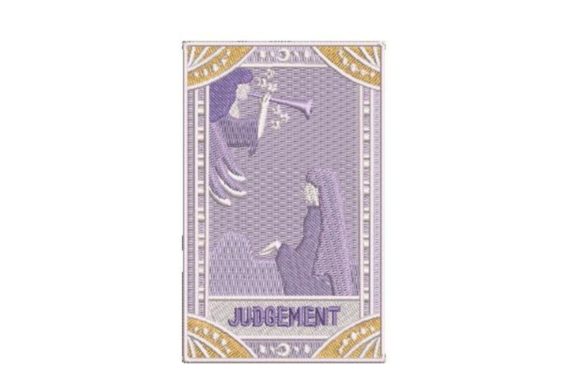
Judgement Tarot Card: A Designer's Review for Craft Fairs
As an experienced embroidery designer who has spent countless weekends setting up booths at local craft fairs and managing a handmade shop, I know that the difference between a design that gathers dust and one that sells out often comes down to visual impact and practical production. Today, I am reviewing the Judgement Tarot Card design with a critical eye. The product description suggests a theme of finding comfort in sharing struggles within a group environment, urging the creator to let this design inspire when stitched on favorite cloth. This spiritual and communal message makes it a fascinating candidate for the Religion category, but does it translate well into a tangible crafter product?
When I first looked at the concept of Judgement Tarot Card, my mind immediately went to the aesthetic possibilities. Is it bold? Is it elegant? Does it fit the farmhouse or modern vibe so popular with Etsy sellers? Based on the title alone, I envision something that feels premium and slightly mystical. It is not necessarily "cute" in the traditional sense, nor is it purely decorative in a floral way. Instead, it carries a weight of significance that demands attention. For a booth display, this design has the potential to be a focal point that draws customers in because it speaks to a deeper emotional need—the desire for connection and renewal.
Visual Appeal and Product Placement
In the real-world scenario of preparing a table display, where do Judgement Tarot Card products stand out? If I were arranging my booth, I would place embroidered tote bags front and center. A tote bag design featuring this motif allows the message to be seen by passersby as they walk past. The design works exceptionally well here because the flat surface of canvas provides a perfect backdrop for the intricate details of a tarot-inspired motif. It transforms a standard utility item into a statement piece that resonates with buyers looking for meaningful accessories.
Beyond tote bags, I see immense potential for apron embroidery and tea towel embroidery. The kitchen is a space of community and gathering, which aligns perfectly with the description's mention of finding comfort in a group environment. An apron with Judgement Tarot Card stitched near the pocket or hemline adds a touch of personality to a functional item. Similarly, a tea towel can serve as a beautiful gift for someone going through a transition. These items are high-value handmade products that allow the customer to take the inspiration home with them.
For smaller, impulse-buy items, the design could be adapted for embroidered patches or fabric pouches. A patch sewn onto a denim jacket or a backpack offers a subtle nod to the wearer's beliefs without being overwhelming. However, the success of these smaller items depends heavily on how the design scales. If the stitch density is too high, the tiny details might get lost on a small pouch. In those cases, it is better to use the design as a larger accent on a pillow cover or market bag where the texture of the fabric enhances the look.
Production Practicality and Sales Strategy
From a business perspective, the Judgement Tarot Card design must be easy to understand at a glance. At a busy craft fair, customers scan tables quickly. If the design is too complex or the lettering is too small, the message gets lost. The design needs to function as a clear focal point rather than a subtle detail. When photographing these items for online listings, such as on Etsy, the contrast between the thread colors and the fabric is crucial. A dark fabric background might make the design pop if the threads are light, but it could also obscure fine details if the lighting isn't perfect.
For batch production, repeatability is key. Can you stitch this design 50 times in a day without losing quality? The answer depends on the specific file format and the complexity of the stitches. If the design requires frequent color changes or has dense areas that trap lint, it may slow down your production line. To ensure efficiency, you should test the design on scrap fabric before committing to a full run. Check the hoop size to ensure the entire motif fits comfortably without needing to re-hoop, which can ruin the alignment.
When creating digital assets or printable mockups for your Etsy seller storefront, focus on showing the design in context. Show the embroidery file applied to a tote bag, an apron, and a pillow cover side-by-side. This helps buyers visualize the finished product. If you are selling a digital embroidery file, ensure the instructions clearly state the recommended stabilizer and fabric types. A commercial embroidery license is essential if you plan to sell the finished goods; always verify the terms before producing any inventory.
Real-World Testing Notes
Before turning Judgement Tarot Card into a bestseller, there are several technical considerations every designer must address. First, inspect the stitch density. Tarot designs often feature intricate lines and shading. If the density is too high, the fabric may pucker, especially on lightweight materials like linen or cotton blends used for tea towels. Using the right stabilizer is non-negotiable here; a cut-away stabilizer will provide the necessary support to keep the design crisp.
Fabric texture plays a massive role in the final look. A thick, textured towel might hide the finer details of the card, making it look muddy. Conversely, a smooth, tight-weave fabric will show off every stitch. Test your design on multiple fabric colors to confirm that the thread colors offer enough contrast. If the design includes small lettering or tiny symbols, be cautious about using it on curved surfaces like caps. The distortion of the cap's curve can stretch the design, causing the text to become illegible.
If you are a small shop owner or a boutique maker, remember that the perceived value of your product is tied to its execution. A poorly stitched embroidered patch looks cheap, but a perfectly executed one looks artisanal. The Judgement Tarot Card design has the potential to elevate a simple tote bag into a premium item. However, this only happens if you pay attention to the details: check thread tension, review spacing, and create at least one real mockup to ensure the design holds up under scrutiny.
Ultimately, the success of this design lies in its ability to connect emotionally with the buyer while maintaining high production standards. By carefully selecting the right products—whether it is a sturdy tote bag, a cozy pillow cover, or a practical apron—you can turn the spiritual message of Judgement Tarot Card into a tangible asset for your business. As you prepare for your next craft fair or update your online store, consider how this design fits into your brand consistency. Does it speak to your audience? Does it look good in person? If the answer is yes, then you have a winning product ready to inspire others through the art of embroidery.